How to Grow Iceland Poppies - Three Things With Tilla Winston-Smith
There are few flowers quite as charming as the Iceland poppy. With their delicate, papery petals, curved stems and soft, joyful colours, they bring a sense of movement and lightness to the garden that feels almost impossible not to love.
For this edition of Three Things With, we’re learning from Tilla Winston-Smith, a flower farmer and photographer based just outside Narrabri in north-western NSW.
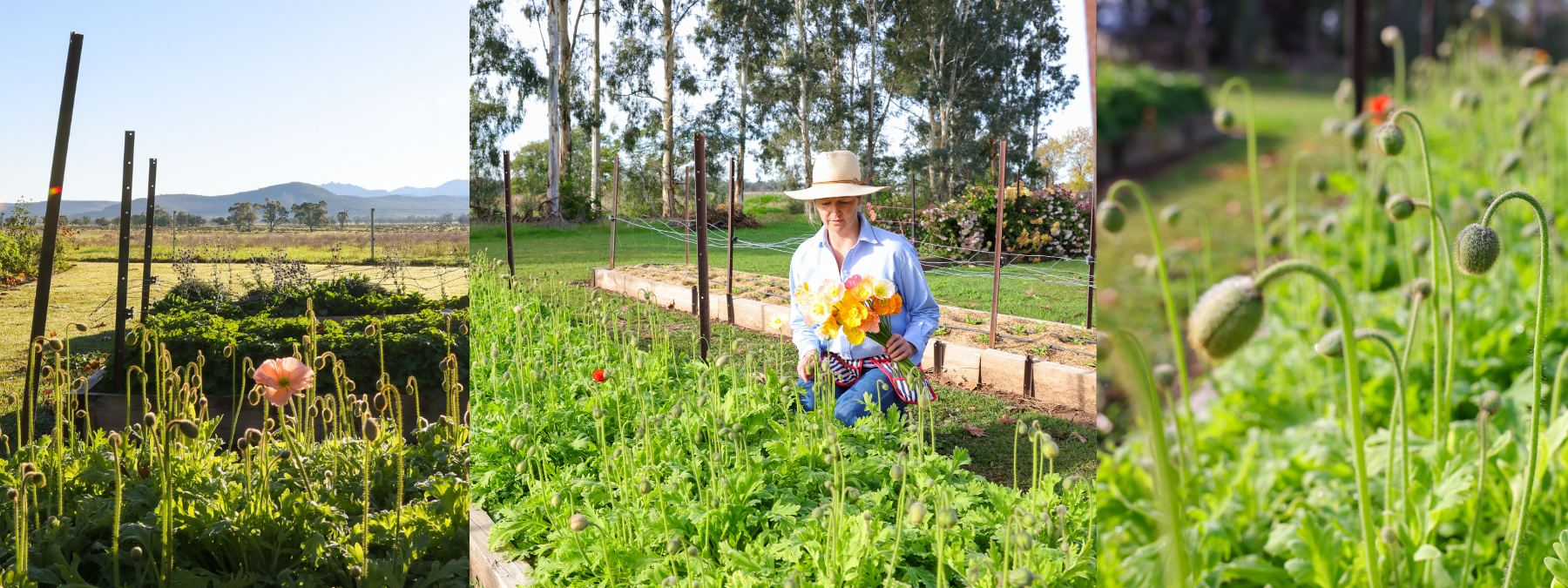
From her small-scale flower farm, Tilla grows seasonal field-grown flowers and foliage for local florists and her community, with a love for varieties that can be harder for rural florists to access. Through her photography, she also captures the beauty of blooms grown in her own garden and shares them as fine art prints through Tilla’s Garden Print Shop. Her seasonal collections include Dahlias and The Poppy Collection, printed on museum-quality cotton rag paper.
Tilla’s growing season begins in mid-August with tulips and poppies, and carries through until May with chrysanthemums. Since beginning her flower-growing journey in 2017, she has embraced the beauty of trial and error, especially when experimenting with varieties suited to a hotter climate.
And when it comes to Iceland poppies, Tilla is well and truly hooked.
“I planted my first Iceland poppies in 2017 and I have been absolutely hooked on growing these papery petaled beauties since then,” she says. “The joy of the first buds opening each year, I don’t think will ever get old.”
Below, Tilla shares three thoughtful growing tips for anyone wanting to grow Iceland poppies at home or in a cutting garden.
1. Plant Iceland Poppies in the Cooler Months
Tilla grows Iceland poppies, also known as Papaver nudicaule, as a regular cut flower crop. Her favourite varieties for cut flower production are Australis Pastel Shades and the newer, supersized Colibri poppies.
In Narrabri, north western NSW, Iceland poppies grow best when planted in autumn and winter, once the soil temperatures have cooled. This gives the seedlings the gentle conditions they need to establish before flowering.
“In my climate, I wait until soil temps have cooled in autumn and plant seedlings out,” Tilla says.

For gardeners in cooler climates, Iceland poppies can often be grown year-round. But in warmer regions, timing matters. Planting during the cooler months gives them the best chance to thrive without being stressed by excessive heat.
Tilla also notes that Iceland poppies can be notoriously tricky to germinate from seed. To help ensure a strong crop, she orders wholesale seedlings for her flower farm. For home gardeners, she suggests checking your local nursery for punnets of seedlings.
Tip: If you’re new to growing Iceland poppies, starting with seedlings can be much easier than starting from seed.

2. Prepare the Soil and Transplant Carefully
Before planting Iceland poppies, Tilla likes to prepare the garden bed with a few helpful additions.
“When prepping the bed, I like to sprinkle some gypsum, which contains calcium and helps with strong flower stems, and Neutrog Sudden Impact before planting seedlings out,” she says.
Healthy soil preparation is especially important if you are growing Iceland poppies for cut flowers, as strong stems make all the difference when it comes to picking and arranging them.
However, Iceland poppies are delicate when it comes to their roots. They do not like having their roots disturbed, so transplanting should be done with care.

“Transplant seedlings out as carefully as possible without damaging the roots,” Tilla says. “They will sulk for a few days, but don’t worry, they will recover from the transplant shock in about a week.”
This is a lovely reminder that even when plants look a little unhappy after planting, patience is often all that is needed. Give them time to settle in, keep them gently watered, and allow them to recover.
Tip: Handle seedlings gently, avoid breaking up the root ball too much, and don’t panic if they look a little sad for the first few days.

3. Pick at the Right Stage for the Longest Vase Life
One of the joys of growing Iceland poppies is bringing them indoors. Their soft, graceful stems and luminous petals make them especially beautiful in a vase.
For the longest vase life, Tilla recommends picking them just as the bud is beginning to crack open and you can see the first glimpse of colour.
“For longest vase life, I pick just as the bud is cracking open and you can see colour,” she says. “Follow the stem down to the base of the plant and snip.”

Once Iceland poppies have fully opened and been pollinated by bees, their vase life will be shorter. But Tilla sees this as part of the rhythm of the garden.
“Any that have popped open and already been pollinated by the bees will have a reduced vase life,” she says. “But that’s okay, it’s always nice to leave some for the bees.”
Regular deadheading also helps encourage the plants to keep producing more buds, giving you a longer and more abundant flowering season.
Tip: Pick early for the vase, leave a few open blooms for the bees, and keep deadheading to encourage more flowers.

Final Thoughts on Growing Iceland Poppies
Iceland poppies may have a reputation for being a little particular, but with the right timing, careful planting, and regular picking, they are a deeply rewarding flower to grow.
For Tilla, they have become a beloved part of her annual growing season, returning each year with their fluttering petals and promise of spring beauty.
Whether you are growing them in a dedicated cutting garden, a flower patch, or a small corner of your backyard, Iceland poppies bring a special kind of joy. They ask for a little patience, but reward you with colour, movement, and the simple delight of watching each bud unfurl.

And perhaps that is the real magic of them: no matter how many times you grow them, the first bloom of the season still feels like a small celebration.
MORE FROM TILLA:
A Day in the Garden with Tilla Winston-Smith
And Shop her gorgeous prints here on her website.
*Subscribe to our newsletter for more Three Things With... features delivered gently to your inbox