How to grow dahlias in a harsh climate with Tilla Winston-Smith
Flower farmer and photographer Tilla Winston-Smith grows just outside Narrabri in north-western NSW, where hot summers have taught her a thing or two about working with the climate rather than against it.
On her small-scale flower farm, she grows seasonal, field-grown flowers for local florists and her community, continually trialling varieties that can cope with warmer conditions. Her approach is refreshingly honest: try, observe, adjust, and try again.

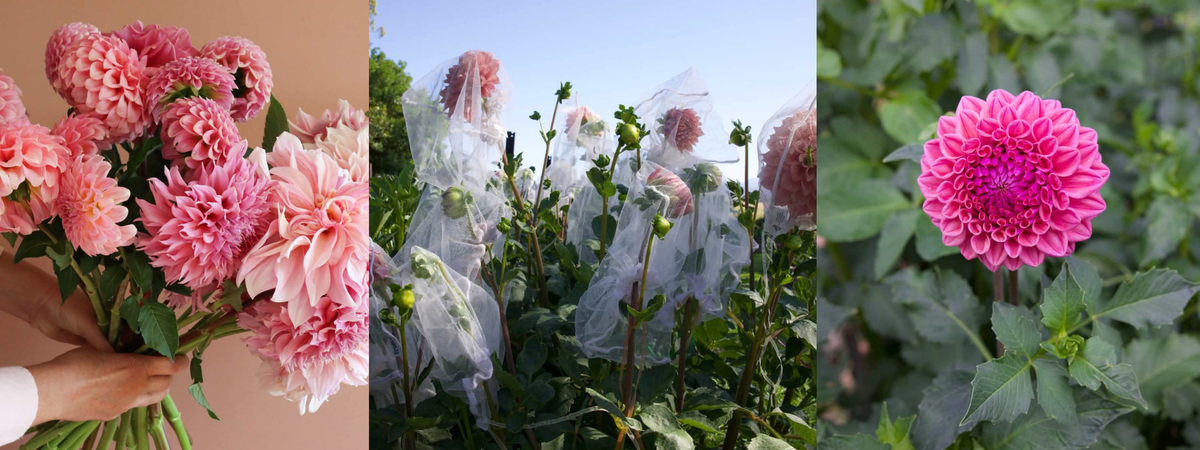
Dahlias are now one of Tilla’s summer staples, but her first attempt in 2018 was rather less promising.
“I had purchased bedding varieties. They were so short and not the prettiest!” she recalls. The following year, she sourced tubers from a specialist cut-flower grower and everything changed. Her love affair with dahlias began.
Years of experimenting have since taught Tilla how to grow dahlias in a harsh climate and, more importantly, what works in her particular patch.
THE GARDEN GLOVE BUNDLE
Start with the right tubers
For anyone interested in growing dahlias for cut flowers, Tilla’s first piece of advice is to buy from a trusted supplier and choose varieties bred for cutting.

A viable dahlia tuber needs an ‘eye’, so check that yours has a visible eye or has begun sprouting. Tilla has also found that her dahlias tend to fare better in their second year, once each plant has developed a small clump of tubers.
In her warmer climate, she plants these clumps around 15cm deep or more, which helps keep them cooler through summer.

Prepare the soil
Tilla’s dahlia planting tips begin well before spring. Over winter, she grows mustard as a cover crop across her dahlia beds. In August, she cuts the mustard plants at the base, leaving the roots to break down in the soil and laying the cut growth over the beds as mulch.

When planting, she adds a generous handful of gypsum and a scoop of Neutrog Sudden Impact to each hole. The calcium in gypsum, she finds, helps encourage stronger flower stems.
Dahlias are frost-sensitive, so gardeners in cooler regions will need to wait until the soil has warmed and the risk of frost has passed.
THE GARDEN GLOVE BUNDLE

Be careful with water
One of Tilla’s most useful pieces of dahlia care advice is perhaps the hardest for an eager gardener: resist watering newly planted tubers.
She waits until the first shoot appears above the soil, as excess moisture beforehand can cause tubers to rot. Once planted, she tucks the bed in with chopped lucerne mulch and a light sprinkling of snail pellets.

As the plants grow, two layers of mesh provide support against the strong winds common around her garden.
Help dahlias through extreme heat
Growing dahlias in Australian summer conditions takes a little ingenuity.
On days of 40°C or more, Tilla runs an overhead sprinkler for around 30 minutes during the hottest part of the day. Her dahlia beds also receive shade from around 3pm, sparing the plants from the fierce western sun.

Come harvest time, she cuts in the cool of the morning and places stems immediately into buckets of water. Regular deadheading keeps the plants producing more flowers as the season continues.
There is no single formula for gardening. Climate, soil and experience all have their say. What began with a rather underwhelming crop in 2018 has become years of learning what these generous summer flowers need to flourish in her corner of NSW.
THE GARDEN GLOVE BUNDLE

If you love seasonal flowers and the realities of growing them, Tilla is well worth following. Between her flower farm and fine-art photography, she shares the flowers she grows, what she has learnt through trial and error, and life amongst the changing seasons just outside Narrabri, from spring poppies through to summer dahlias and beyond.