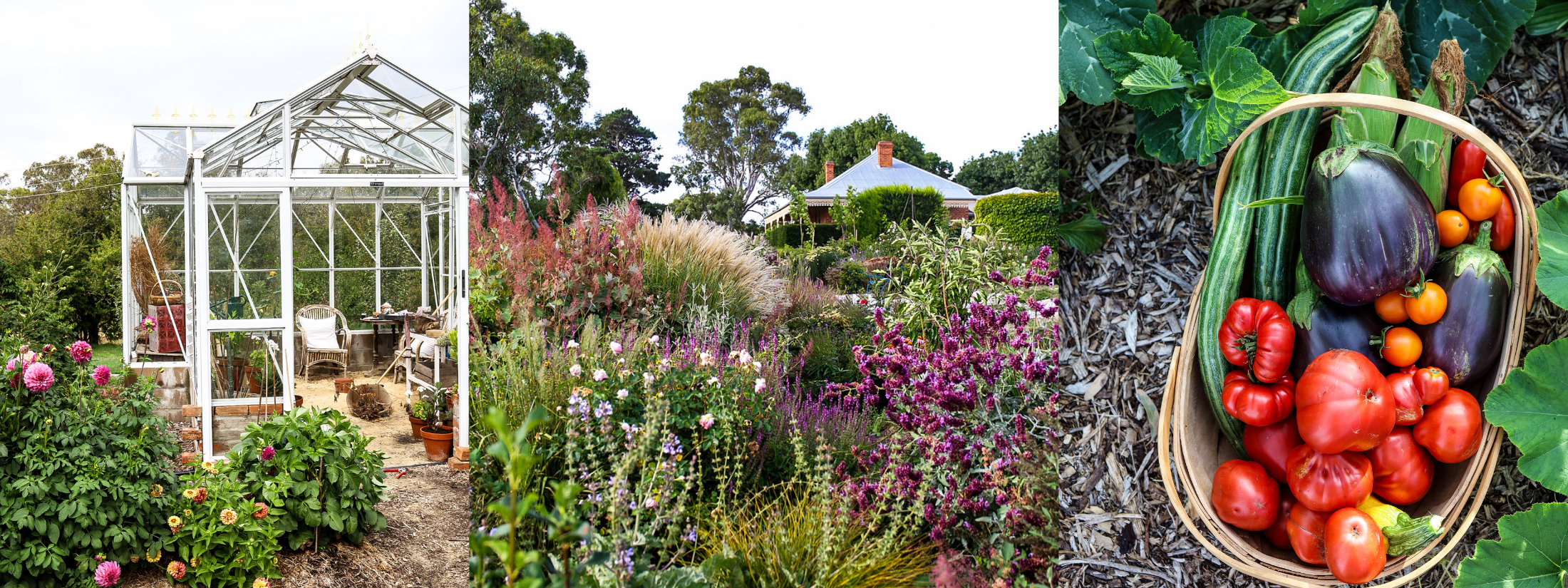
Article: How to Build a Garden from Nothing - Lessons from Pip Steele-Wareham at The Garden at Moorfield
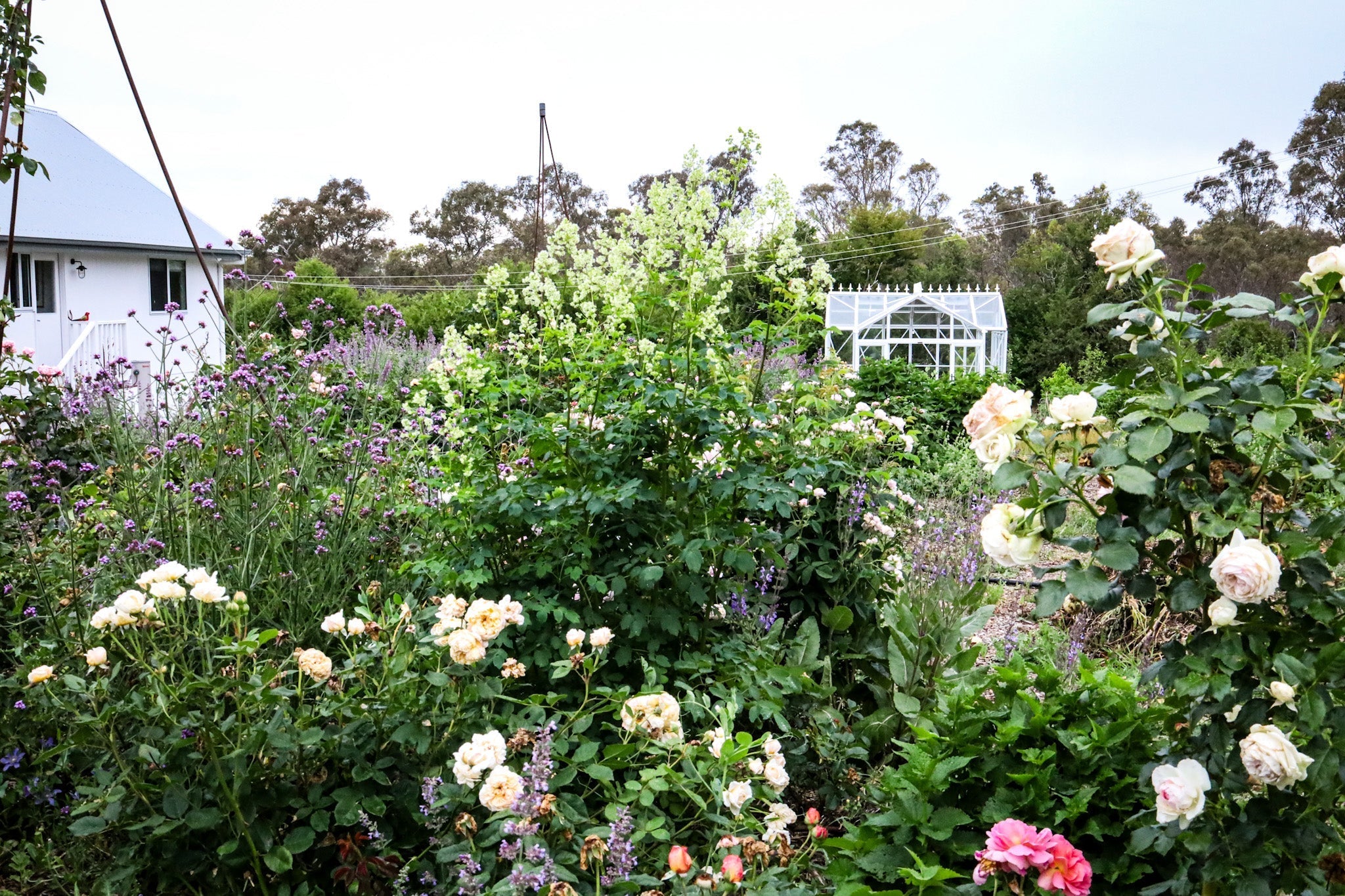
How to Build a Garden from Nothing - Lessons from Pip Steele-Wareham at The Garden at Moorfield
Starting a garden from bare land sounds wildly romantic — and in many ways, it is. There is the dream, the open space, the first planting, the possibility of what it might become.
But anyone who has ever started with an empty paddock, a tired block, or a neglected corner knows this too: building a garden from nothing takes patience, commitment, observation and a willingness to keep learning.
For Pip Steele-Wareham, designer, horticulturist, writer and gardener behind The Garden at Moorfield, this is familiar territory.
Moorfield is a 170-year-old former sheep station in the Goldfields Region of Victoria. Before this, Pip and her family created Little Oak, a 160-year-old former orchard in Southern Tasmania. As Pip says, Moorfield is their “second rodeo” — but even with experience, starting again has brought a whole new set of lessons.
A new climate. New soil. New foundations. New challenges. A new place to understand.
Here are five thoughtful lessons from Pip’s approach to creating a country garden from bare land.
1. Start with the vision, but don’t try to build it all at once
When you are looking at a large piece of land, the scale can feel overwhelming.
At Moorfield, Pip and Hugo are building a 5-acre garden themselves, organically, from the first idea through to the finished garden. It is a huge undertaking, but their approach is simple and steady: work through the garden room by room.
Instead of trying to complete everything at once, they focus on one area at a time.
This makes the work feel more possible. It also allows each space to develop properly, with its own purpose, planting and feeling.
A garden built slowly often becomes a more considered garden. It has time to respond to the land, the family and the seasons.

2. Think in garden rooms
One of the most helpful ways to approach a bare piece of land is to stop seeing it as one enormous space.
Instead, divide it into rooms.
At Moorfield, Pip has created both ornamental and productive garden areas. There are spaces for food, flowers, family use, views, gathering and future visitors. Each room has its own role, but together they contribute to the feeling of the whole garden.
This is especially useful in country gardens, where the scale can be generous and the work can feel endless.
Garden rooms create structure. They help you decide where to begin, what each area is for, and how the garden will be used day to day.
A productive garden might sit close to the kitchen. A flower garden might frame a view. A quiet sitting area might catch the afternoon light. A path might guide you naturally from the house to the outbuildings.
When every space has a purpose, the whole garden begins to make sense.

3. Build the connections between spaces
Once the main garden rooms are established, the next step is connection.
At Moorfield, Pip is now working on what she calls the “through spaces” — the gardens that connect the already existing rooms. These are the areas that link the original homestead with its outbuildings and her mother’s cottage.
It is easy to focus only on the hero areas of a garden: the rose garden, the vegetable patch, the orchard, the long border.
But the spaces in between matter just as much.
They are what help a garden flow. They guide movement, soften transitions and make separate areas feel like part of one larger story.
These connecting spaces might be paths, plantings, hedges, gates, gravel areas or simple lines of repeated plants. They do not need to be complicated. They just need to help the garden feel connected and easy to move through.

4. Use what you have learned, but let the new garden teach you
Because Moorfield is Pip and Hugo’s second large garden project, they came into it with experience.
They had already built Little Oak in Southern Tasmania, and that knowledge helped them move more quickly at Moorfield.
But as Pip says, there is still so much learning to do when you begin again.
No matter how much you think you know, a new garden can completely humble you. The soil behaves differently. The frost lands harder. The seasons shift. The plants that thrived in one place may struggle in another.

This is one of the great truths of gardening: experience helps, but every garden is its own teacher.
The best thing you can bring to a new garden is not certainty, but curiosity.
Watch where the water sits. Notice where the wind comes through. Learn where the frost bites hardest. Pay attention to what grows well without fuss. Let the land show you what it needs.
5. Get in step with the place
Pip describes the early stage of a new garden as a period where the climate, soil and challenges can “bamboozle” you for a good long while.
It is only after time, trial and observation that you begin to understand the place properly.
This may be the most important lesson of all.
A garden is not something we simply impose on the land. It is something we build in conversation with it.

At Moorfield, the garden is only halfway there, but already it carries a clear sense of direction. There are productive spaces, ornamental areas, family connections and plans to one day open the garden for visitors and workshops.
It is a garden being created with vision, but also with humility.
And perhaps that is what makes a garden from bare land so special. You are not just planting trees, laying paths or creating beds. You are building a relationship with a place.

For anyone beginning again, or looking out at a patch of bare land wondering where to start, Pip’s story is a generous reminder:
Start with one room.
Learn the land.
Connect the spaces.
Keep going.
The garden will come.
Follow Pip at @the_garden_at_moorfield for more of her work creating a cool-climate country garden from the ground up in the Victorian Goldfields.
Read Pip's full Day in the Garden feature here.