A Day in the Garden with Phillida Steele-Wareham
This month, our Day in the Garden takes us to The Garden at Moorfield, a cool-climate country garden in the Victorian Goldfields, on Dja Dja Wurrung Country.
Behind Moorfield is Pip Steele-Wareham and her family, Pip is a designer, horticulturist, writer and gardener. Together they are creating a remarkable garden around a 170-year-old former sheep station. It is a place of food, flowers, family life and steady work. A garden being built from bare land, room by room, with both productive and ornamental spaces slowly coming together around the original homestead, outbuildings and her mother’s cottage.

For Pip, the garden is more than a project. It is her work, her creative practice, her way of caring for family, and the place where her daughter is growing up next to nature.
As Pip says, “Gardening for me is not only my work, but it also really keeps the rhythm of our entire life.”
Let's take a closer look at a day in Pip’s garden at Moorfield.
7:00am – 9:30am
Coffee, Substack and the school run
Pip’s day begins, with coffee in bed and a a moment to check in on Substack, where she shares the process of what they are doing in the garden and how they are achieving it.
Of course, the stillness does not last long.
Living on a property outside of town means mornings soon become a rush to get through the school run before returning home and heading back into the garden.
On weekends, the pace changes again. The garden becomes a family affair, with everyone getting involved.

9:30am – 11:00am
Into the glasshouse
Once home, Pip heads straight to the glasshouse.
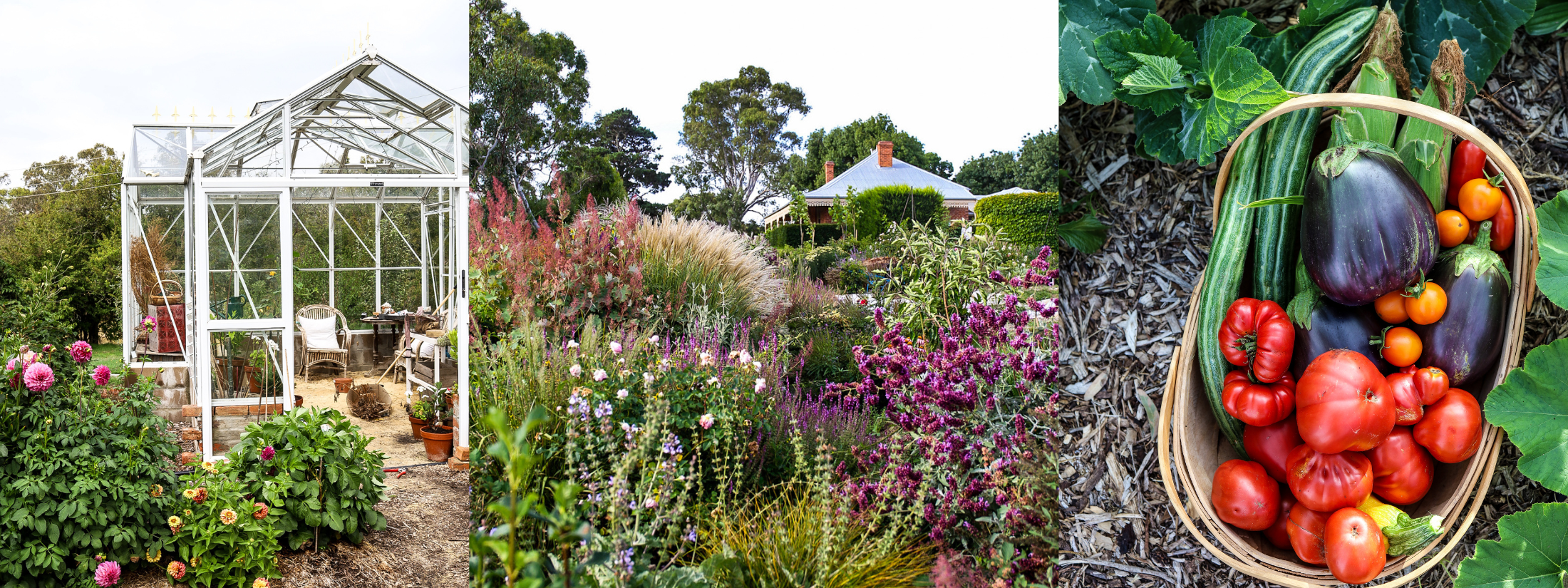
In the Victorian Goldfields, where long stretches of blackening frost are part of garden life, the glasshouse is essential. It is where Pip raises seedlings, propagates plants for the coming seasons, and saves seed from what has just passed.
It is also one of the few quiet pauses in the day.
Often, Pip sits with Ella, the family Kelpie, looking out across the garden and working through what needs to be done not just that day, but in the weeks and months ahead.

11:00am – 2:30pm
The full garden list
Once Pip starts working outside, she rarely slows down.
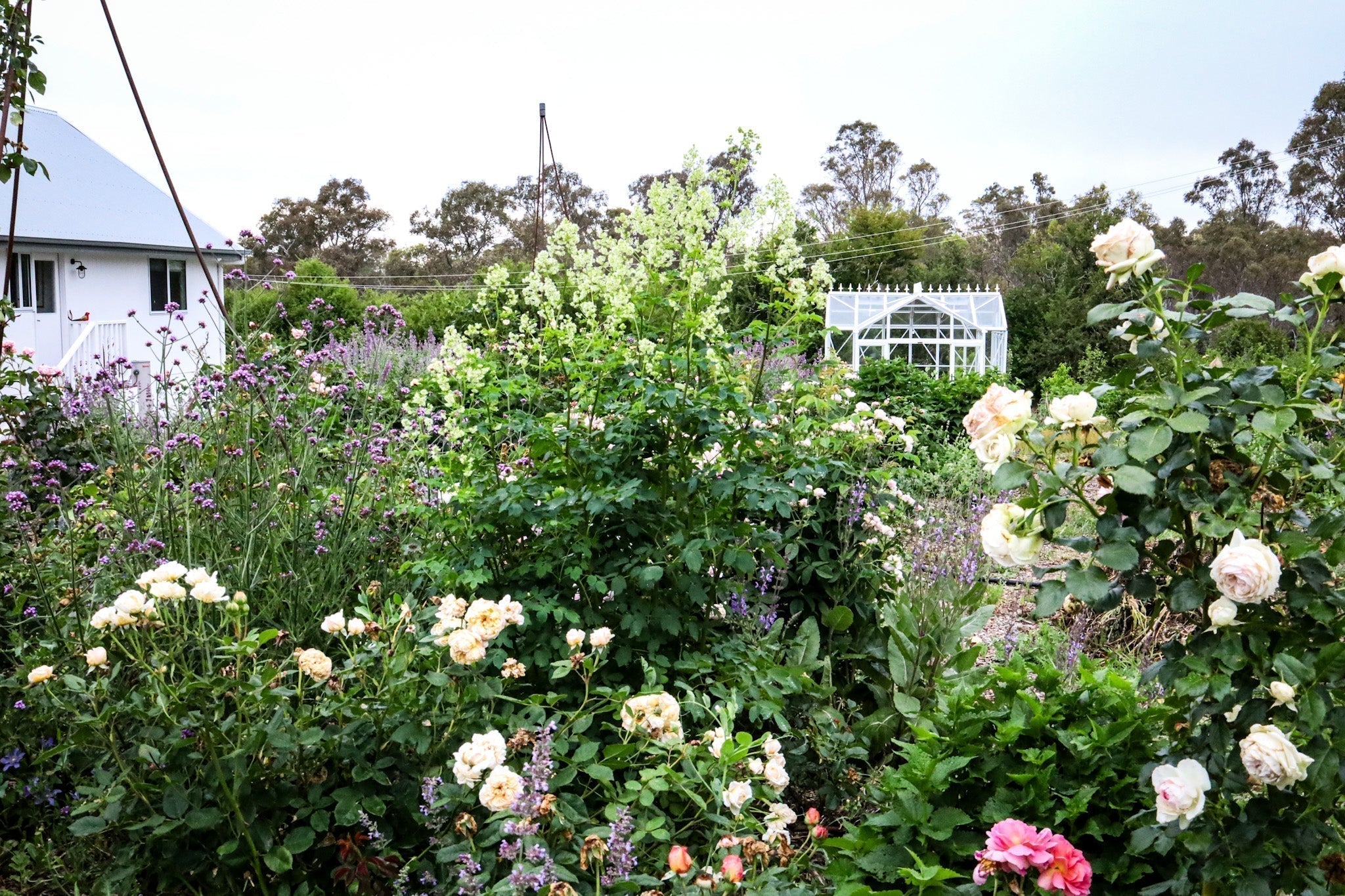
Moorfield is a garden of many parts: a productive garden with 40-odd fruit trees, vegetables, berries and cut flowers, as well as ornamental gardens including the Rose Garden, Long Border and Dry Garden.
There are also many spaces still being created. Pip and her family are building the garden day-by-day, and working through it room by room.
It is a huge undertaking, but this is not Pip’s first time starting from scratch. Before Moorfield, she and Hugo created Little Oak, a former orchard in Southern Tasmania. That experience has given them confidence, still... each new garden still brings its own climate, soil, foundations and challenges.

3:30pm – 5:00pm
Harvests, berries and family life
After school pick-up, Pip’s daughter often joins her in the garden until dinner.
This is where the garden becomes part of the family table. Lately, the last of the tomato harvest has been turned into creamy tomato soup and spaghetti with passata. Next in line are the pumpkins.
Pip’s daughter helps with compost, liquid fertilisers, vegetable picking and flowers for the house. Though, as Pip says, mostly she eats the berries before they ever make it inside.
SHOP GARDEN ESSENTIALS

There is also a deeply generational element to the garden at Moorfield. Pip’s mother lives in a cottage on the property, and the two homes are connected by the garden. Pip often says, “I grow it, and Mum preserves it,” though both try to do a little of each when they can.
For Pip, this may be one of the most meaningful parts of Moorfield three generations growing, harvesting, cooking and learning together.
“I often think I grow the garden for her more than anything or anyone else.”

7:00pm – 9:00pm
Writing, illustrating and returning to the garden in another way
Once the little one has gone to bed, Pip often heads to her office.
As a trained designer and horticulturist, her work does not stop at planting, pruning or harvesting. She writes, illustrates and shares the garden through Substack, bringing together her creative background and her deep knowledge of plants and place.
For Pip, writing and illustrating about gardens is not separate from the work outside. It is another way of staying close to it.

And perhaps that is the heart of Pip’s story: a garden can be more than a place. It can be a livelihood, a family gathering point, a creative practice, and a way of teaching the next generation what it means to belong to the natural world.
Follow Pip at @the_garden_at_moorfield for more of her work creating a cool-climate country garden from the ground up in the Victorian Goldfields.
Join Pip for more on her substack and read her monthly journal here.
More from Pip:
How to build a garden soil up